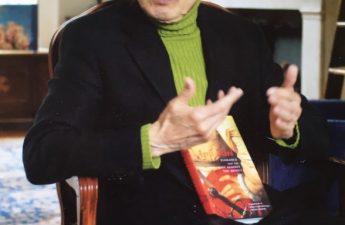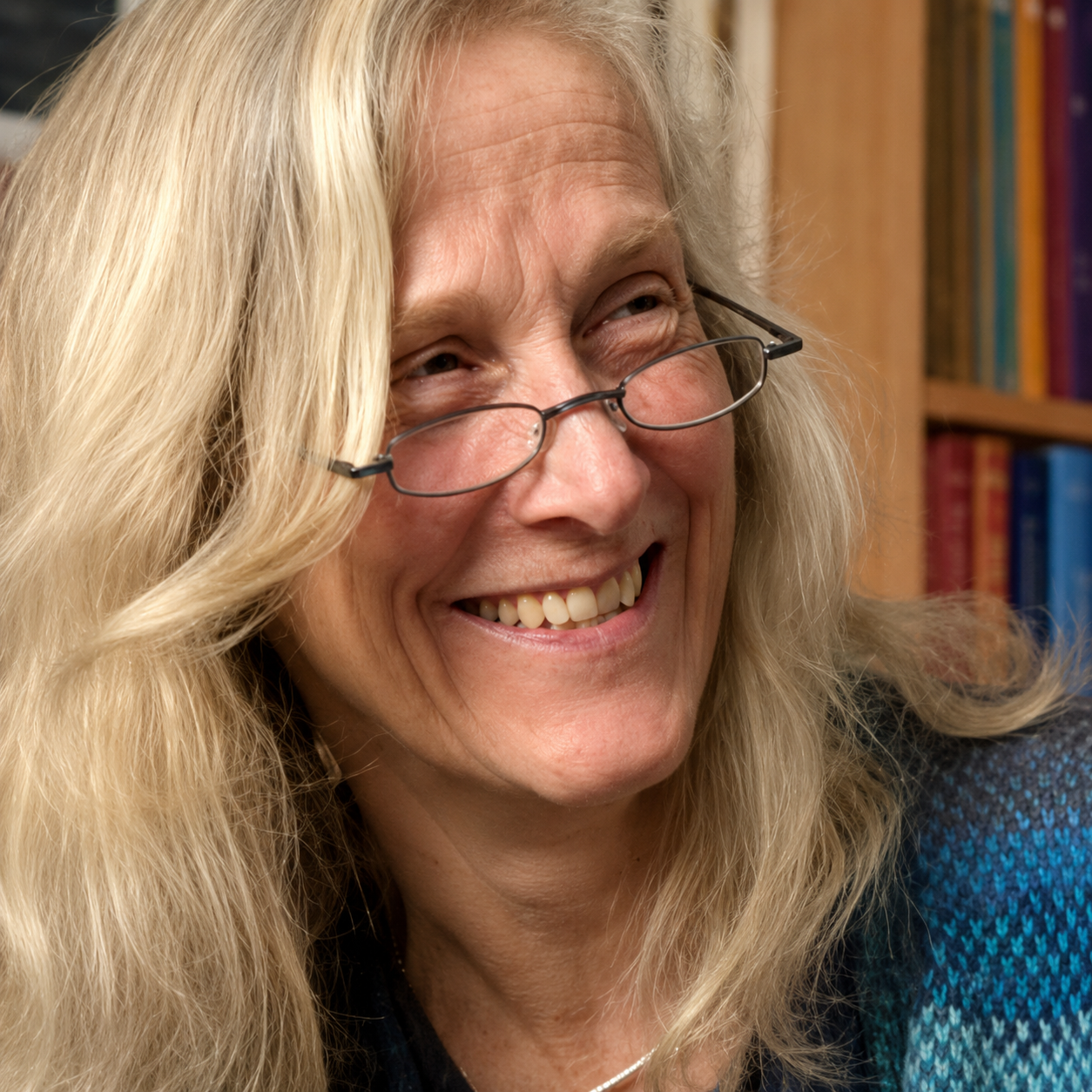
On 13 June 2026, Rosamond McKitterick, née Pierce (Chesterfield 1949 – Cambridge 2026), a celebrated historian of the European early Middle Ages, passed away after a brief illness. For readers in Italy and elsewhere, her name is associated with her pioneering work on Carolingian Frankish literacy and early medieval history writing.
McKitterick began her research at Cambridge as a student of Walter Ullmann, an Austrian-Jewish scholar forced into exile by the Nazis. Ullmann encouraged her to study the Frankish penitentials, which were the subject of her earliest publication, published under her maiden name. However, McKitterick developed a wider interest in the Frankish church under the Carolingians, and it was on this broad theme that she wrote her PhD thesis, published as The Frankish Church and the Carolingian Reforms, 789-895 in 1977. This was followed by a survey of the political history of the Frankish kingdoms, published in 1983 and still a valuable reference point today.
It was, however, her 1995 book The Carolingians and the Written Word which brought McKitterick’s work to an international audience. In this book, she argued for a much deeper engagement with writing on the part of the Carolingian Franks than many historians had supposed (indeed, she liked to say that she wrote it after an article making the same case had been rejected by the American journal Speculum as insufficiently evidenced for such a bold claim). Her argument was made on the basis of a mastery of the whole range of written evidence, ranging from charter scribes in St Gall to library catalogues to law codes, and the book swiftly won international acclaim.
Later in her career, McKitterick developed a sustained interest in history-writing. History and Memory in the Carolingian World, published in 2004, showed how historically minded the Franks were. It made its argument on the basis of a remarkable knowledge of the surviving manuscripts, for which McKitterick was renowned (and whose shelfmarks she had an uncanny ability to recall). That attention to the manuscripts, honed through time spent in many libraries across Europe, also underpinned her recent book on the Liber Pontificalis, published in 2020, for which an Italian translation is planned.
These and many other books and publications, including her biography of Charlemagne, McKitterick wrote mostly from her book-lined study in Cambridge, the city where she spent her entire career. However, despite her love for Cambridge, her research was characteristically open to continental European scholarship, in which she saw herself as a participant. Here, she was influenced not just by her doctoral supervisor Ullmann but also by the palaeographer Bernhard Bischoff, with whom she studied for a while in Munich, as well as by many contemporary friends on the continent. She spoke and published in German, French and Italian as well as English. The importance of engaging with the European community of medieval historians was something she impressed on her PhD students, whatever their nationality. That she had so many PhD students – some 49 in total – is a testimony both to her extraordinary energy and to her ability to inspire students through her teaching.
McKitterick was a towering figure in early medieval history in the UK, and in Europe more generally. She repeatedly reshaped how we think about early medieval European history, and deservedly received plaudits and awards from international bodies for that work: but despite her profile and status, she remained an extraordinarily friendly and approachable figure for junior scholars at the start of their careers, and a loyal friend and supporter for many peers and former students.
Charles West, The University of Edinburgh